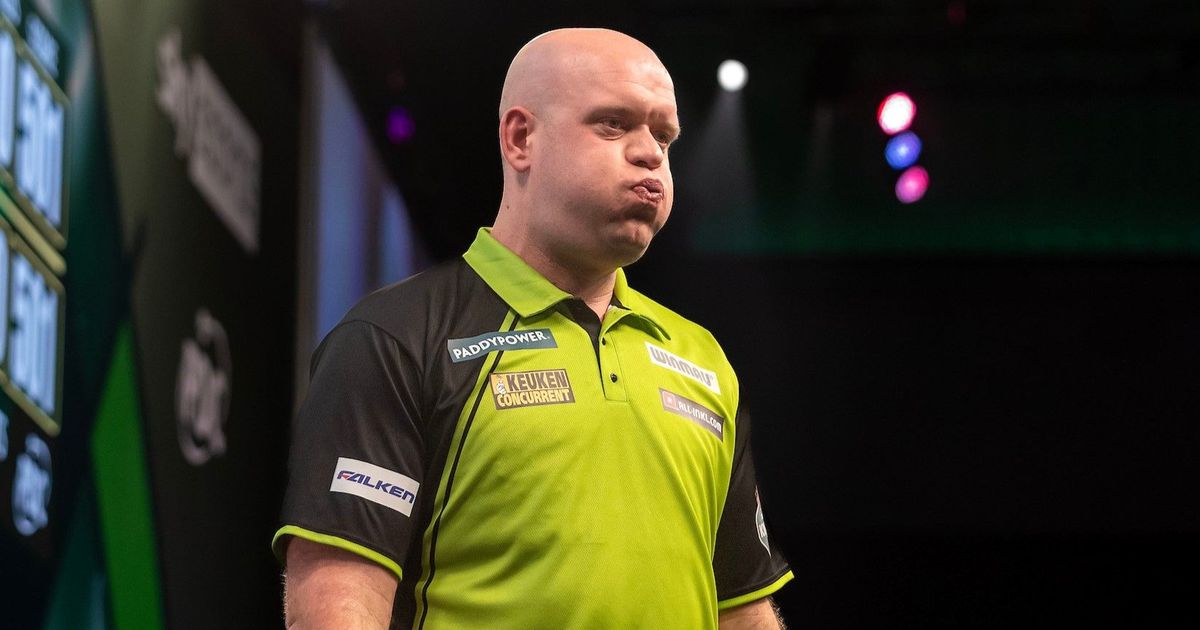
Michael van Gerwen, affectionately known as 'The Green Machine', stands as one of the most iconic and dominant figures in the modern era of professional darts. Born on April 25, 1989, this Dutch sensation has redefined the sport with his electrifying pace, aggressive scoring, and ruthless finishing. A three-time World Darts Champion (2014, 2017, and 2019), MVG's trophy cabinet is brimming with numerous Premier League titles, ProTour victories, and countless other accolades, solidifying his status as a true legend of the oche.
But what truly underpins the sustained brilliance of Michael van Gerwen's darts game? Beyond the sheer volume of his wins, it's a meticulously crafted approach built on two critical pillars: relentless scoring pressure and clinical checkout conversion. This article delves deep into these fundamental aspects, offering insights into how MVG consistently overwhelms opponents and what makes his game a masterclass in strategic darts.
The Relentless Pursuit: MVG's Scoring Pressure
The foundation of Michael van Gerwen's darts lies in his unparalleled ability to apply scoring pressure from the very first dart. His game is not merely about hitting big scores; it's about doing so with a blistering tempo that psychologically grinds down adversaries.
- T20-First Dominance: MVG is predominantly a T20-first scorer. This aggressive approach aims to establish an immediate advantage, often with rapid successions of 140s and 180s. This early bombardment forces opponents onto the back foot, compelling them to chase the leg rather than dictate it.
- Psychological Warfare: When van Gerwen is at his peak, opponents describe feeling an immense pressure, almost as if they must throw 'perfect darts' just to stay in contention. This isn't just about the numbers; it's the speed and confidence with which he posts them, creating an almost suffocating atmosphere at the board.
- Adaptability and Recovery: While his primary target is the T20, MVG is remarkably comfortable switching targets if his first dart strays into the 5 or 1 segment. Crucially, he does this without losing his rhythm or confidence, a testament to his ingrained muscle memory and mental fortitude. This adaptability ensures that even minor misses don't derail his scoring momentum for long.
- Understanding Scoring Baselines: For those looking to truly gauge his performance, comparing his 3-dart average with his first 9 average is incredibly insightful. The first 9 average often reveals whether he is effectively winning the scoring phase of a leg, irrespective of his later doubling. A strong first 9 indicates the relentless pressure is being applied as intended.
This heavy scoring isn't just for show; it's a calculated tactic to reduce the number of darts available for an opponent to finish, thereby increasing MVG's own opportunities at a double. It’s a classic example of controlling the game from the outset, a characteristic explored further in Michael van Gerwen: Dominance, World Titles & Explosive Darts.
Clinical Conversion: MVG's Checkout Prowess
Scoring big is only half the battle in darts; the other, arguably more crucial half, is converting those scores into successful finishes. This is where Michael van Gerwen's darts truly shine, as his reputation is built on an unwavering ability to convert opportunities quickly and decisively.
- Seizing the Moment: Unlike some players who might wait for a 'perfect' setup, van Gerwen often takes the most direct route to a checkout. He prioritizes converting the chance in hand, frequently leaving himself a straightforward two-dart finish – typically a single to a preferred double. This bold strategy puts the onus back on his opponent, daring them to keep pace or face a lost leg.
- Preferred Doubles and Natural Routes: While preferred doubles can vary slightly, MVG typically favors those that align with natural scoring routes from common finishes. For instance, after hitting a big treble, he often leaves a 'clean' double that minimizes the risk of busts or complex setups. His ability to hit D20, D18, and D16 under immense pressure is a hallmark of his finishing game. He's also adept at complex combination finishes, demonstrating a deep understanding of the board and superb execution.
- Conversion Rate Over Pure Scoring: A fascinating insight into MVG's game is that his match results are often decided more by his checkout conversion rate than by his pure scoring average. While his scoring baseline is consistently strong enough to generate chances, it's his ability to capitalize on those chances that truly separates him from the pack. High scoring creates opportunities, but clinical finishing seals the deal.
- The Impact of Missed Doubles: In short-format matches, a couple of missed doubles can be catastrophic, easily flipping the outcome of a best-of-11 encounter. However, in longer formats, van Gerwen's high scoring often grants him repeated looks at the double, allowing him to stabilize his conversion rate even after a few early misses. This resilience is a key factor in his success in major tournaments.
Format Adaptation and Strategic Nuances
The strategic deployment of scoring pressure and checkout conversion also varies depending on the format of the game, a nuance that Michael van Gerwen understands and exploits effectively.
- Longer Formats, Greater Advantage: MVG generally thrives as formats get longer. His relentless scoring pressure tends to "average out" over an extended number of legs, making it increasingly difficult for opponents to maintain the high standard required to compete. The cumulative effect of his rapid 140s and 180s wears down even the most resilient players.
- Shorter Formats, Higher Variance: Conversely, shorter best-of matches, particularly on the ProTour 'floor' events, can be more perilous for van Gerwen. A single slow start or an opponent hitting an uncharacteristically hot streak can significantly impact the outcome, as there's less time for his scoring advantage to become decisive.
- Schedule and Travel Impact: For elite players like MVG, tour status and match volume are significant factors. Competing weekly across both floor events and televised stages can lead to form swings that are more reflective of travel fatigue and a demanding schedule than a dip in actual skill level. Analyzing his performance requires considering these external pressures.
- The 180 as a Ceiling Measure: While 180s are a clean measure of ceiling scoring, they can be 'noisy' in small samples. It's more effective to use the 180 rate in conjunction with the first 9 average to get a comprehensive view of his top-end scoring capabilities within a match.
Analyzing MVG's Form: What to Look For
For fans and analysts alike, understanding Michael van Gerwen's darts involves more than just glancing at headlines. It requires a deeper dive into the data and an appreciation of his unique playing style. Sites providing The Michael van Gerwen Darts Profile: Key Stats & Match Impact offer valuable tools for this.
- Pace and Tempo: MVG plays with a quick, confident tempo. When he's in full flow, this pace can rush opponents into making sub-optimal choices, forcing errors. However, when he's slightly off, the same rapid pace can sometimes lead to 'clusters' (multiple darts in the same segment, indicating slight misalignment) that can look worse than they are, but still cost him vital points.
- Beyond the Overall Average: As noted, comparing his 3-dart average with his first 9 average is crucial. While the overall average includes doubling, the first 9 average is a purer indicator of his initial scoring power and ability to establish control in a leg.
- Recent Results & Context: While MVG consistently challenges for titles, even he faces upsets. Recent news items, such as Clayton beating him in a thrilling Premier League final or stunning losses to rising stars like Van Veen, highlight the competitive nature of modern darts. However, a single loss doesn't define his overall ability; it's about evaluating his underlying statistics and trend over time. For example, his continued strong performances, like marching on at the Belgian Open, demonstrate his resilience.
- Practical Tip for Fans: When watching MVG, pay close attention to the early darts in each leg. Is he hitting those 140s and 180s with ease? How quickly is he reducing his score? Then, observe his setup shots and checkout attempts. Is he leaving himself a clear double, or is he scrambling? These elements will tell you more about his current 'true' level than just the final result.
Conclusion
Michael van Gerwen's darts game remains a benchmark for excellence in professional darts. His unique blend of explosive scoring pressure and clinical checkout conversion creates an almost insurmountable challenge for his opponents. While results can fluctuate due to format, schedule, or the sheer quality of his adversaries, the underlying principles of his game remain remarkably consistent. Understanding how MVG builds pressure and converts opportunities offers invaluable insight not just into his individual matches, but into the strategic depth of modern darts itself. The Green Machine continues to captivate audiences, proving that relentless aggression, combined with pinpoint accuracy, is a recipe for enduring dominance on the global stage.